
The Lily Sugar’n Cream Crochet Waffle Kitchen Cloth is a warm and useful project that brings texture and functionality to your kitchen. This easy pattern is perfect for makers looking to enhance their home with handmade touches. Not only does it serve as a useful dishcloth. It also adds a own flair to your kitchen décor.
Using the popular Lily Sugar’n Cream yarn, this dishcloth is made to be both absorbent and durable, making it ideal for everyday use. The waffle stitch pattern creates a sweet texture, enhancing its absorbency while being clearly nice. Whether you’re a beginner or an skilled crocheter, this project will be fun and rewarding.
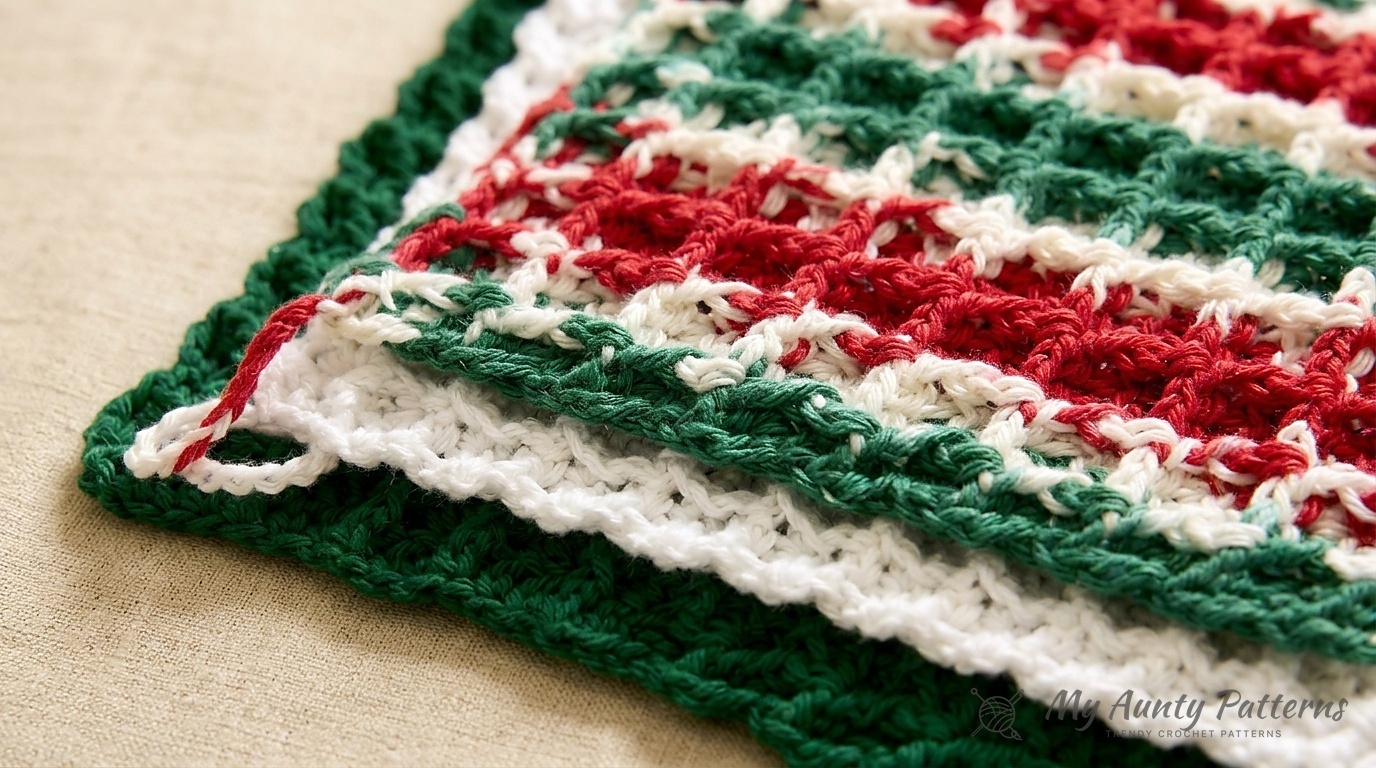
Lily Crochet Waffle Kitchen: Understanding the Waffle Stitch Construction
The waffle stitch used in this pattern gives the cloth its characteristic texture and functionality. This stitch uses switching between double crochet and double crochet front post stitches, creating a raised pattern that boosts the absorbency of the cloth. As you work through the pattern, you’ll repeat two exact rows that establish this texture, making it easy to memorize and execute.
To begin, you’ll chain a named number of stitches and start with a base row of double crochet. Using this, the pattern shifts between rows that use both regular double crochet and front post double crochet. Contributes to the unique waffle effect. This repetition not only makes the pattern clear but also allows you to see the texture develop as you progress.
Choosing Your Yarn and Hook Size
Selecting the right yarn is key for getting the chosen texture and durability in your kitchen cloth. The pattern just calls for Lily Sugar’n Cream yarn, known for its absorbency and strength. This yarn comes in a range of colors, letting you to customize your dishcloth to match your kitchen decor or own style.
The listed hook size for this project is a U.S. size 7 (4.5 mm). Using the correct hook size will help you achieve the named gauge of fourteen single crochets and fifteen rows per four inches. Keeping gauge is crucial for making sure your done cloth is the right size and has the planned texture.
Project Specifications and Measurements
Sizes & fit
Approx 9″ [23 cm] square.
Gauge & motif dimensions
14 sc and 15 rows = 4″ [10 cm]
Hook specified in the pattern
Size U.S. 7 (4.5 mm) Susan Bates® Silvalume® crochet hook or size needed to obtain gauge.
Materials Required for Your Kitchen Cloth

Lily® Sugar’n Cream® (Solids: 2.5 oz/70.9 g; 120 yds/109 m; Ombres: 2 oz /57 g; 95 yds/86 m) White (00001) or Dark Pine (00016) or Mistletoe (00138) or Hot Orange (01628) or Swimmng Pool Ombre (02744) 1 ball or 92 yds/84 m Size U.S. 7 (4.5 mm) Susan Bates® Silvalume® crochet hook or size needed to obtain gauge. Susan Bates® yarn needle. White Dark Pine Hot Orange White Swimmng Pool Ombre Mistletoe
Step-by-Step Instructions for Crocheting the Cloth

Ch 34.
1st row: (WS). 1 dc in 4th ch from hook (counts as 2 dc). 1 dc in each ch to end of chain. Turn. 32 sts.
2nd row: (RS). Ch 3 (counts as dc). 1 dc in next st. *1 dcfp around post of next st. 1 dc in each of next 2 sts. Rep from * to last 3 sts. 1 dcfp around post of next st. 1 dc in each of last 2 sts. Turn.
3rd row: Ch 2 (counts as hdc). 1 dcfp around post of next st. *1 dc in next st. (1 dcfp around post of next st) twice. Rep from * to last 3 sts. 1 dc in next st. 1 dcfp around post of next st. 1 hdc in top of turning ch. Turn. Rep last 2 rows for Waffle Pat until work from beg measures 8¾” [25 cm], ending on a WS row. Final row: (RS). Ch 3 (counts as dc). 1 dc in next st. *1 dcfp around post of next st. 1 dc in each of next 2 sts. Rep from * to last 3 sts. 1 dcfp around post of next st. 1 dc in each of last 2 sts. Ch 15 (for loop). Sl st back into top of last dc. Fasten off. Approx = Approximately
| Abbreviation | Meaning in the original pattern |
|---|---|
| Beg | Beginning |
| Ch | Chain(s) |
| Dc | Double crochet Dcfp (double crochet front post) = Yoh and draw up a loop around post of next stitch at front of work 1 row below, inserting hook from right to left. (Yoh and draw through 2 loops on hook) twice. |
| Pat | Pattern |
| Rep | Repeat |
| RS | Right side |
| Sc | Single crochet |
| Sl st | Slip stitch |
| St(s) | Stitch(es) |
| WS | Wrong side |
| Y oh | Yarn over hook |
CROCHET I SKILL LEVEL: EASY
MATERIALS
Lily® Sugar’n Cream® (Solids: 2.5 oz/70.9 g; 120 yds/109 m; Ombres: 2 oz /57 g; 95 yds/86 m) White (00001) or Dark Pine (00016) or Mistletoe (00138) or Hot Orange (01628) or Swimmng Pool Ombre (02744) 1 ball or 92 yds/84 m Size U.S. 7 (4.5 mm) Susan Bates® Silvalume® crochet hook or size needed to obtain gauge. Susan Bates® yarn needle. White Dark Pine Hot Orange White Swimmng Pool Ombre Mistletoe
Frequently Asked Questions about the Waffle Kitchen Cloth
What size will my finished waffle kitchen cloth be?
Once completed, the waffle kitchen cloth measures about nine inches square. This size is useful for various kitchen tasks, from drying dishes to wiping countertops. If you follow the pattern closely, your done product should meet this size, letting it to be effectively used in everyday kitchen activities.
It’s worth noting that variations in tension or yarn choice can slightly affect the size. If you notice your cloth is not reaching the planned sizes, check checking your gauge as named in the pattern.
How do I know if I’m maintaining the correct gauge?
Keeping the correct gauge is crucial for making sure your project turns out as planned. To check your gauge, crochet a swatch of the named stitches and measure it against the gauge steps. The pattern indicates that you should have fourteen single crochets and fifteen rows per four inches.
If your swatch does not match the gauge, you may need to adjust your hook size. A larger hook will create a looser stitch, while a smaller hook will tighten the stitches. This change will help you achieve the listed gauge, making sure your done cloth is the right size.
Can I use a different yarn for this pattern?
While the pattern just recommends Lily Sugar’n Cream yarn for its absorbency and durability, you can experiment with other yarns. Still, it’s key to ensure that any substitute yarn matches the gauge requirements. Distinct yarns can have varying thicknesses and absorbencies. May affect the full texture and functionality of your kitchen cloth.
If you choose to use a distinct yarn, make a gauge swatch first to confirm that your done project will be the correct size and maintain the waffle texture.

Now that you have all the details for your kitchen cloth, gather your supplies and start making! This project is an excellent way to practice your skills while creating something useful for your home.
Save & Print This Crochet Pattern
Prefer working offline or keeping a printed copy in your project bag? Download our formatted Crochet Waffle Kitchen Cloth printable PDF guide below, complete with the full materials table, stitch diagrams, color-key charts, and step-by-step assembly instructions prepared for My Aunty Patterns.
READER COMMENTS & PATTERN QUESTIONS
Have a question about stitch counts, yarn substitutions, or sizing? Leave a comment below — Mary Ward reads and replies to every maker question!