Picture a sun-drenched Mediterranean afternoon, where vibrant colors dance on your plate, and the tantalizing aroma of fresh herbs wafts through the air. This Greek salad recipe bursts with juicy tomatoes, crisp cucumbers, creamy feta cheese, and briny olives, creating a symphony of flavors that sing of summer picnics and leisurely gatherings with friends.
I still remember the first time I tasted a Greek salad at my grandmother’s table, where laughter mingled with the clinking of glasses filled with chilled lemonade. Whether you’re hosting a backyard barbecue or simply craving something refreshing after a long day, this dish promises to transport you to a sunlit terrace overlooking the sea, filling your senses with anticipation for that perfect bite.
Why Will You Keep Making greek salad recipe?
Vibrant flavors come together in this Greek Salad, making it a delightful addition to any meal. Fresh vegetables like cucumbers, tomatoes, and bell peppers deliver a satisfying crunch that will have everyone reaching for seconds. Creamy feta cheese adds a rich, tangy element, perfectly complemented by the briny kick of Kalamata olives. Quick to prepare, this no-cook dish takes just 15 minutes, making it an excellent choice for busy weeknights or last-minute gatherings. Versatile and crowd-pleasing, it pairs beautifully with grilled meats or can stand alone as a light lunch.
greek salad recipe Ingredients
For the Vegetables
- 2 cups Cucumber (diced) – Fresh cucumbers add a crisp texture and refreshing taste to your greek salad recipe.
- 2 cups Tomatoes (diced) – Juicy tomatoes bring vibrant color and a burst of flavor.
- 1 cup Red onion (thinly sliced) – Thinly sliced red onions provide a mild sweetness that complements the other ingredients.
- 1 cup Bell pepper (diced) – Diced bell peppers add crunch and a hint of sweetness, balancing the salad beautifully.
For the Cheese and Olives
- 1 cup Feta cheese (crumbled) – Crumbled feta offers a tangy creaminess that enhances the overall flavor profile of the salad.
- 1/2 cup Kalamata olives (pitted and halved) – These briny olives add depth and richness, making every bite more satisfying.
For the Dressing
- 1/4 cup Olive oil – A high-quality olive oil serves as the base for your dressing, bringing a smooth richness to the salad.
- 2 tablespoons Red wine vinegar – This adds acidity, brightening up the flavors and balancing the creaminess of the feta.
- 1 teaspoon Dried oregano – Oregano provides an aromatic earthiness that is essential in classic greek salads.
- 1 teaspoon Salt (to taste) – Adjust salt to enhance all flavors; it’s always better to start with less and add more if needed.
- 1/2 teaspoon Black pepper (to taste) – Freshly ground black pepper adds a subtle heat that rounds out this delicious dish.
How to Make greek salad recipe

1. Dice the cucumber and tomatoes, thinly slice the red onion, and dice the bell pepper. Aim for uniform pieces to ensure a delightful crunch and vibrant colors in your salad.
2. Combine in a large mixing bowl the diced cucumber, tomatoes, red onion, bell pepper, crumbled feta cheese, and halved Kalamata olives. Mix gently to blend the fresh flavors and textures together beautifully.
3. Whisk together in a small bowl the olive oil, red wine vinegar, dried oregano, salt, and black pepper. This dressing will enhance every bite with its aromatic and tangy notes.
4. Pour the dressing over the salad and toss gently to combine. Ensure every piece is coated evenly for that perfect burst of flavor in each mouthful.
5. Serve immediately, garnished with additional feta cheese and olives if desired. Enjoy this refreshing dish at room temperature for the best taste experience!
Optional: Add a sprinkle of fresh parsley for an extra pop of color!
Exact quantities are listed in the recipe card below.
Tips for the Best greek salad recipe
- Fresh Ingredients: Use the freshest cucumbers and tomatoes for optimal flavor. Overripe vegetables can make the salad soggy.
- Onion Balance: Thinly slice the red onion to avoid overpowering the salad. Soaking in cold water for 10 minutes can reduce its sharpness.
- Cheese Quality: Opt for high-quality feta cheese; crumbled varieties can vary significantly in taste. Fresh feta adds a delightful creaminess.
- Olives Matter: Choose Kalamata olives for their rich flavor. Avoid using cheap, canned olives that can detract from your greek salad recipe.
- Dressing Timing: Dress the salad just before serving to keep the vegetables crisp. If dressed too early, they might wilt and lose texture.
How to Store and Freeze greek salad recipe
Fridge: Store any leftover greek salad recipe in an airtight container for up to 3 days. Keep the dressing separate to maintain freshness.
Freezer: It’s best not to freeze this salad, as the vegetables and feta may become mushy upon thawing. Enjoy it fresh!
Room Temperature: If serving at a gathering, limit exposure to room temperature to no more than 2 hours to ensure food safety.
Reheating: This salad is best enjoyed cold or at room temperature; no reheating is necessary for optimal flavor and texture.
greek salad recipe Your Way
Feel free to get creative and personalize this salad with delightful twists that suit your taste buds!
- Herb-Infused: Add fresh herbs like basil or mint for a fragrant touch. Their aromatic qualities will elevate the dish, making every bite a burst of freshness.
- Zesty Citrus: Squeeze in some lemon or lime juice for a tangy kick. The citrus will brighten the flavors, adding a refreshing zing that dances on your palate.
- Spicy Kick: Toss in some diced jalapeños or crushed red pepper flakes for heat. This variation is perfect for those who love a fiery touch, igniting your taste buds with warmth.
- Crunchy Additions: Mix in some radishes or snap peas for extra crunch. These textures create a delightful contrast against the creamy feta, making each mouthful exciting.
- Protein Boost: Include grilled chicken or chickpeas for added protein. This transformation not only enhances heartiness but also turns your salad into a satisfying meal.
- Colorful Twist: Swap out bell peppers for roasted red peppers or sun-dried tomatoes. This switch introduces rich flavors and vibrant colors, making your salad visually stunning.
- Savory Olives: Use different types of olives like green olives or Castelvetrano for varied taste experiences. Each olive brings its own unique flavor profile, enriching the overall dish.
Make Ahead Options

Preparing this greek salad recipe is a delightful way to embrace meal prep, making it perfect for busy weekdays or gatherings. You can dice the cucumber, tomatoes, red onion, and bell pepper up to 24 hours in advance, storing them separately in airtight containers to maintain their crispness. The feta cheese and Kalamata olives can also be combined ahead of time, adding a burst of flavor without losing quality. For the dressing, whisk together the olive oil, red wine vinegar, oregano, salt, and black pepper ahead of time as well; it holds beautifully in the fridge for up to three days. When you’re ready to serve your vibrant salad, simply toss everything together and enjoy! This thoughtful prep not only saves time but ensures every bite is fresh and delicious.
greek salad recipe Questions Answered
What type of cucumbers are best for this salad?
For the freshest taste, use English cucumbers or Persian cucumbers. They have fewer seeds and a thinner skin, making them perfect for a refreshing crunch. Just make sure to dice them into bite-sized pieces for easy eating!
Can I substitute the red onion with another type of onion?
Absolutely! If red onions are too strong for your taste, you can use sweet onions like Vidalia or even shallots. Just remember that they should be thinly sliced to maintain that delicate balance in flavor.
How should I store leftover Greek salad?
If you have leftovers, store them in an airtight container in the refrigerator. Ideally, consume them within 2-3 days for the best flavor and texture. Keep in mind that the dressing may cause the vegetables to soften over time, so it’s best to add it just before serving if possible.
Can I freeze Greek salad?
Freezing is not recommended for Greek salad, as the fresh vegetables will lose their crispness and become mushy once thawed. Instead, prepare only what you need for a meal. If you have leftover dressing, you can freeze it separately in an ice cube tray for future use!
What can I serve with my Greek salad?
Greek salad pairs beautifully with grilled meats, pita bread, or even as a topping on a bed of quinoa or couscous. It’s versatile enough to complement many dishes! Each serving contains around 200 calories, making it a healthy side dish or light meal option.
Is this Greek salad recipe suitable for vegetarians?
Yes! This Greek salad recipe is entirely vegetarian-friendly thanks to its wholesome ingredients like feta cheese and fresh vegetables. However, if you’re looking for a vegan option, you can replace feta with crumbled tofu or simply omit cheese altogether while still enjoying all those vibrant flavors!
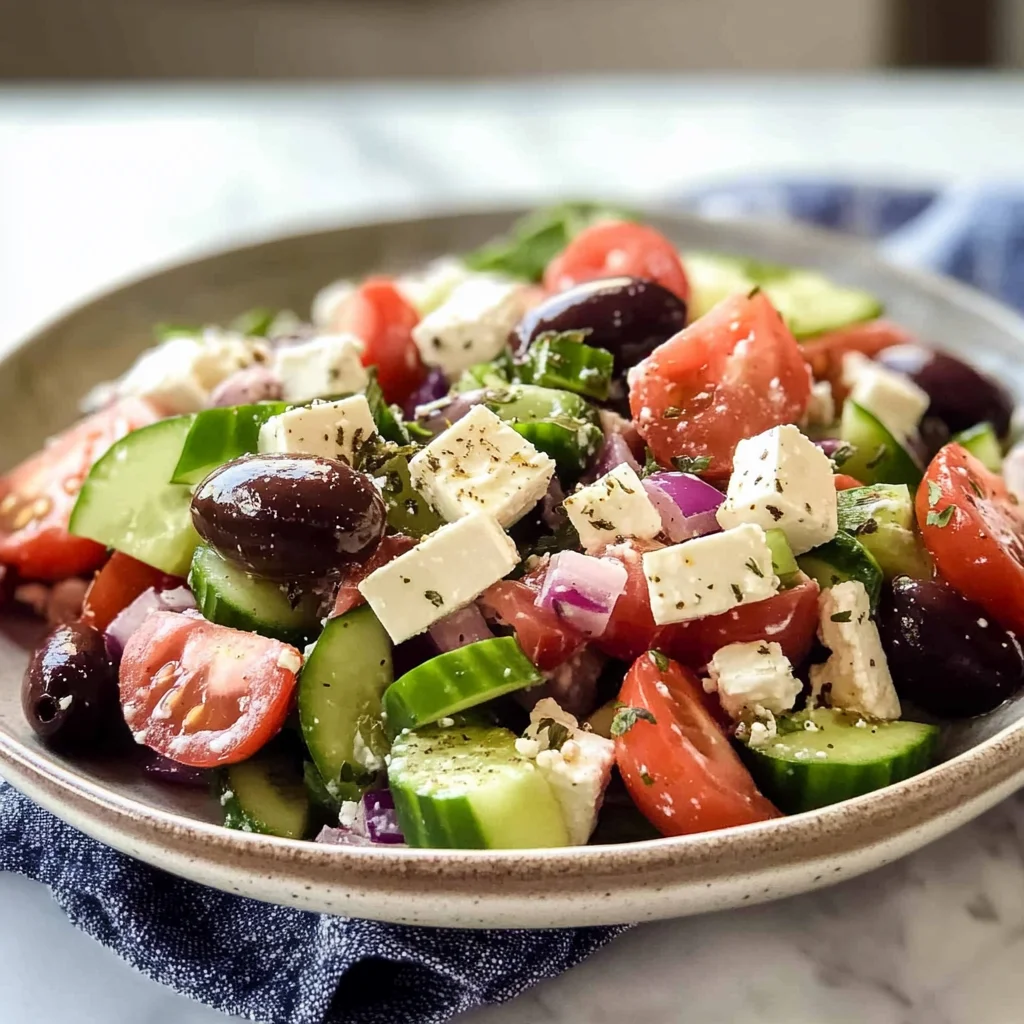
Greek Salad
Ingredients
Method
- Dice the cucumber and tomatoes, thinly slice the red onion, and dice the bell pepper.
- In a large mixing bowl, combine the diced cucumber, tomatoes, red onion, bell pepper, feta cheese, and Kalamata olives.
- In a small bowl, whisk together the olive oil, red wine vinegar, dried oregano, salt, and black pepper.
- Pour the dressing over the salad and toss gently to combine.
- Serve immediately, garnished with additional feta cheese and olives if desired.