The Bernat Beautiful Crochet Baby Blanket Pattern is a charming project, perfect for makers at any skill level. This warm pattern is made to create a cozy blanket that will be cherished by both the maker and the recipient. With its soft texture and nice design, this blanket makes an ideal gift for new parents.
Showing a mix of double crochet clusters and V-stitches, the blanket is not only stylish but also simple to construct. The clear steps guide you through each step, letting you to enjoy the crochet process while creating a sweet piece for a baby’s nursery.
Bernat Beautiful Crochet Baby: Understanding the Blanket’s Design
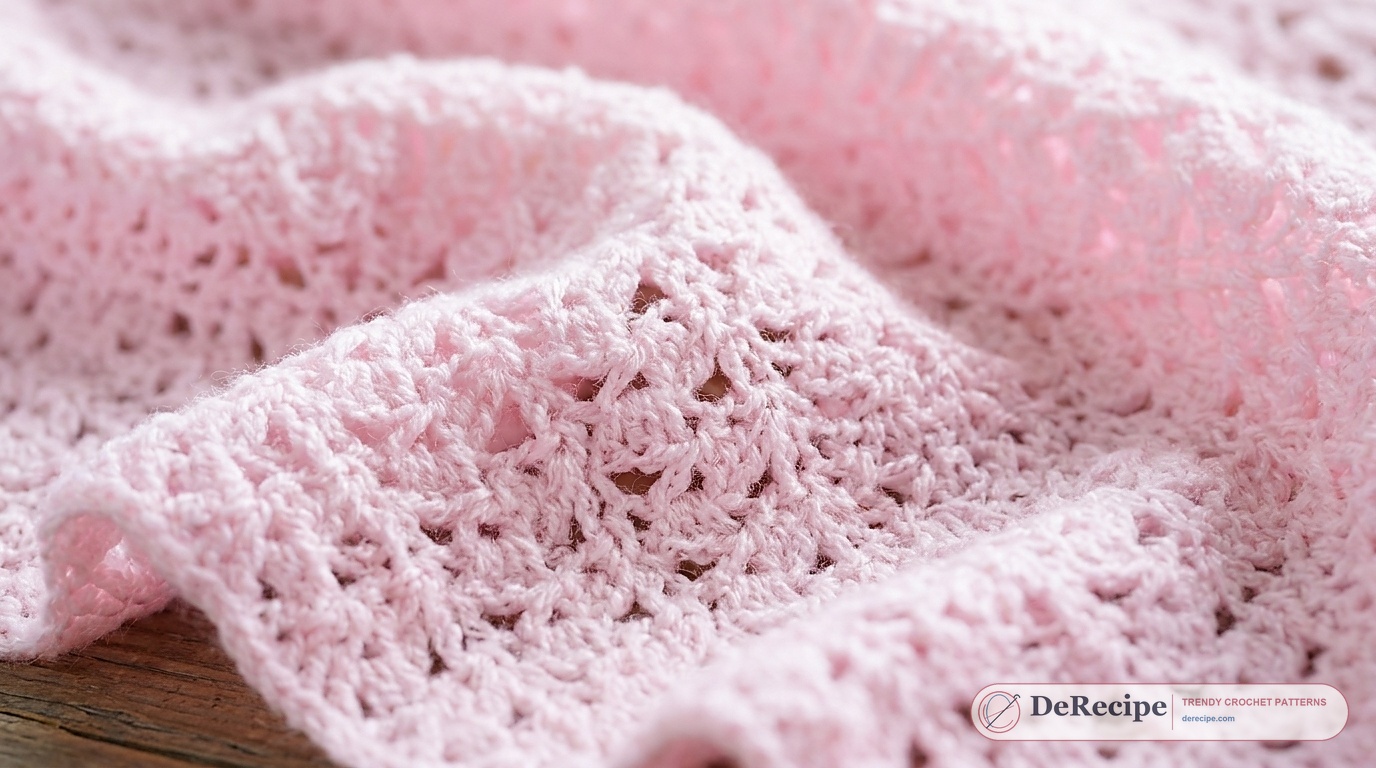
This blanket shows a sweet blend of clusters and V-stitches that create a ribbed fabric. The pattern begins with a base chain and shifts between these two stitch types through the rows. This method boosts the visual appeal and gives a rhythmic crochet experience.
As you progress, you’ll find the pattern easy to memorize, thanks to its repetitive nature. This engaging rhythm makes it fun to see the blanket develop, resulting in a beautiful drape that’s perfect for wrapping around a baby.
Gathering Your Materials
To create this sweet blanket, you will need Bernat Baby yarn in the Pink colorway. The pattern calls for four balls of yarn. Ensures you have enough to complete the project without interruptions. Make sure to gather all your supplies before starting, with your crochet hook, to streamline your process.
Using a size G/6 crochet hook is crucial for getting the correct gauge. This helps maintain even stitches and ensures your blanket has the chosen sizes. If your stitches appear too tight or loose, check adjusting your hook size slightly to achieve the correct gauge.
Incorporating Color Changes
While this pattern is made in a single color, feel free to add color changes for a personalized touch. If you wish to create stripes or other patterns, plan your color placements beforehand to visualize how they will interact and ensure smooth transitions.
When changing colors, carry the unused yarn along the side of your work to maintain a clean edge. Even tension is also key to avoid puckering or unevenness in the done blanket.
Pattern Specifications and Measurements
Sizes & fit
Approx 30″ [76 cm] square.
Gauge & motif dimensions
18½ sc and 24 rows = 4″ [10 cm].
SKILL LEVEL: EASY
|CROCHET
Hook specified in the pattern
Sizes U.S. G/6 (4 mm) crochet hook or size needed to obtain gauge.
Required Materials for the Blanket

Bernat® Baby™ (1.75 oz/50 g) Pink (00469) 4 balls Sizes U.S. G/6 (4 mm) crochet hook or size needed to obtain gauge.
Frequently Asked Questions about the Baby Blanket
What size will the finished blanket be?
The done blanket measures about thirty inches square. This size is perfect for cribs and playtime, offering just the right amount of coverage for little ones. Its compact size makes it easy to handle and move around, ideal for both parents and babies.
If you’d like to create a larger blanket, you can adjust the base chain well. Just keep in mind that you may need additional yarn and that this could affect the full look of the pattern.
Is this pattern suitable for beginners?
Yes, this pattern is marked as easy and is great for new makers. It introduces key crochet skills such as double crochet, clusters, and V-stitches. The clear steps guide you through each row, making it clear for those new to making.
The repetitive nature of the stitches allows new makers to practice and build confidence as they progress. By the end of the project, you’ll have a beautiful blanket and improved making skills.
How can I ensure my gauge is correct?
To ensure your gauge is accurate, crochet a swatch before starting the blanket. The pattern lists a gauge of eighteen and a half single crochets and twenty-four rows per four inches. Make a small swatch and measure it to see if it matches this gauge.
If your gauge doesn’t match, you may need to adjust your hook size. A larger hook will create looser stitches, while a smaller hook will create tighter stitches. This step is key for getting the correct sizes and full look of your blanket.
Detailed Instructions for the Blanket

Ch 163.
1st row: (RS). 1 dc in 3rd ch from hook (counts as 2 dc in one ch). Miss next 3 ch. (4 dc. Ch 2. 1 dc) in next ch – Cluster made. *Ch 1. Miss next 3 ch. (1 dc. Ch 1. 1 dc) in next ch – V-st made. Miss next 3 ch. Cluster in next ch. Rep from * to last 4 ch. Ch 1. Miss next 3 ch. 2 dc in last ch.
2nd row: Ch 3. 1 dc in first dc. *Cluster in ch-2 sp of next Cluster. Ch 1. V-st in nex t V-st. Rep from * to last Cluster. Cluster in ch-2 sp of next Cluster. Ch 1. Miss next 5 dc. 2 dc in last dc. Rep last row for pat until work from beg measures 29½” [75 cm], ending with RS facing for next row. Fasten off. With RS of work facing, join yarn with sl st to first ch of foundation ch. Ch 3. 1 dc in same sp as sl st (counts as 2 dc). Miss next 3 ch. Cluster in next ch. *Ch 1. Miss next 3 ch. V-st in next ch. Miss next 3 ch. Cluster in next ch. Rep from * 18 times more. Ch 1. Miss next 3 ch. 2 dc in last ch. Fasten off.
ABBREVIATIONS:
| Abbreviation | Meaning in the original pattern |
|---|---|
| Approx | approximately |
| Beg | beginning |
| Ch | chain |
| Dc | double crochet |
| Pat | pattern |
| Rep | repeat |
| RS | right side |
| Sc | single crochet |
| Sl st | slip stitch |
| Sp(s) | Space(s) |
| St(s) | stitch(es) |
MEASUREMENTS
Approx 30″ [76 cm] square.
GAUGE
18½ sc and 24 rows = 4″ [10 cm].
SKILL LEVEL: EASY
|CROCHET

Now that you have the pattern and tips at your fingertips, gather your supplies and start making this beautiful baby blanket. It’s a rewarding project that will bring joy to both you and the little one who receives it.
Save & Print This Crochet Pattern
Prefer working offline or keeping a printed copy in your project bag? Download our formatted Beautiful Crochet Baby Blanket printable PDF guide below, complete with the full materials table, stitch diagrams, color-key charts, and step-by-step assembly instructions prepared for Derecipe.


READER COMMENTS & PATTERN QUESTIONS
Have a question about stitch counts, yarn substitutions, or sizing? Leave a comment below — Mary Ward reads and replies to every maker question!